> For the complete documentation index, see [llms.txt](https://help.ecombe.com/llms.txt). Markdown versions of documentation pages are available by appending `.md` to page URLs; this page is available as [Markdown](https://help.ecombe.com/pages-and-section-creations/pages/how-to-create-blog-post-page-with-ecombe.md).
# How to create Blog post page with Ecombe
## Overview
This article will guide you through the steps to create a **Blog post page** using **Ecombe Page Builder**, allowing you to customize your blog page layout without any coding.
## What is a Blog post page?
A **blog post page** is the page where the full content of a single blog article is displayed.
It includes the post title, content, images, author information, publish date, and sometimes comments or related posts. The blog post page allows visitors to read your article in detail and engage with your content.
A well-designed blog post page helps improve readability, build trust with your audience, and increase time spent on your store.
## Step-by-step guide
{% stepper %}
{% step %}
#### Access Ecombe Page Builder
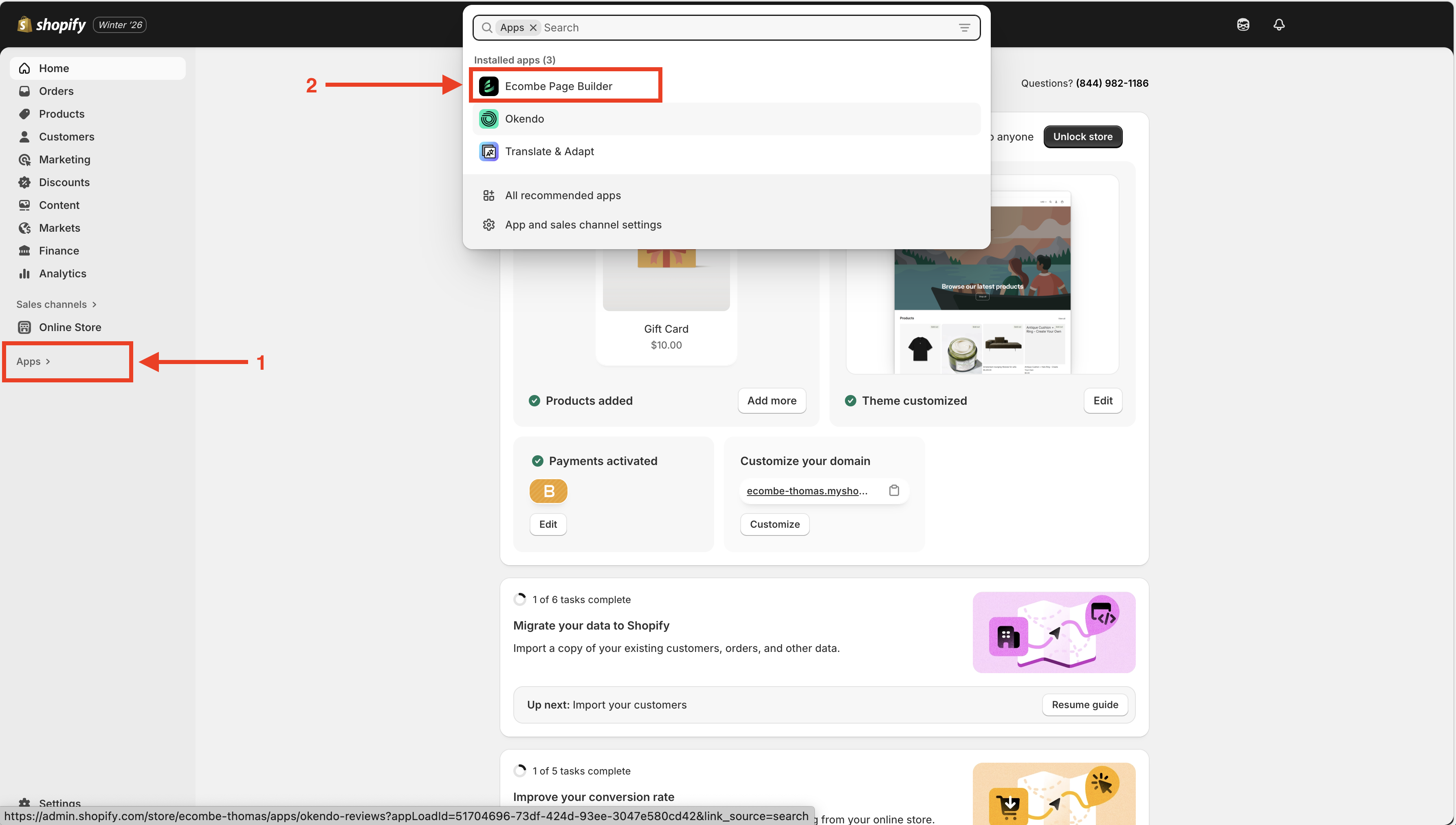
Go to **Shopify Admin** → **Apps** → **Ecombe Page Builder**
{% endstep %}
{% step %}
#### Create a new page
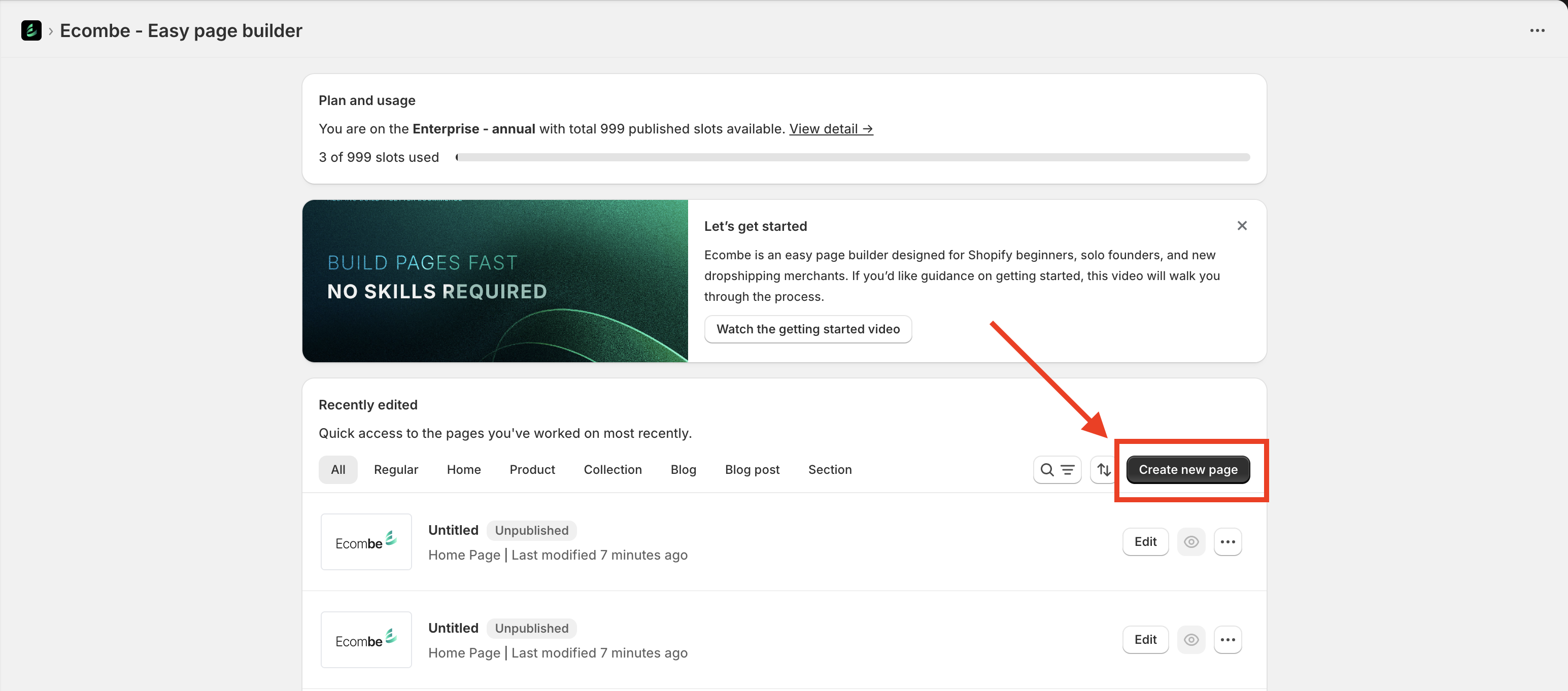
From the **Ecombe Welcome Dashboard**, click the **Create New Page** button.
{% endstep %}
{% step %}
#### Choose a Blog page template
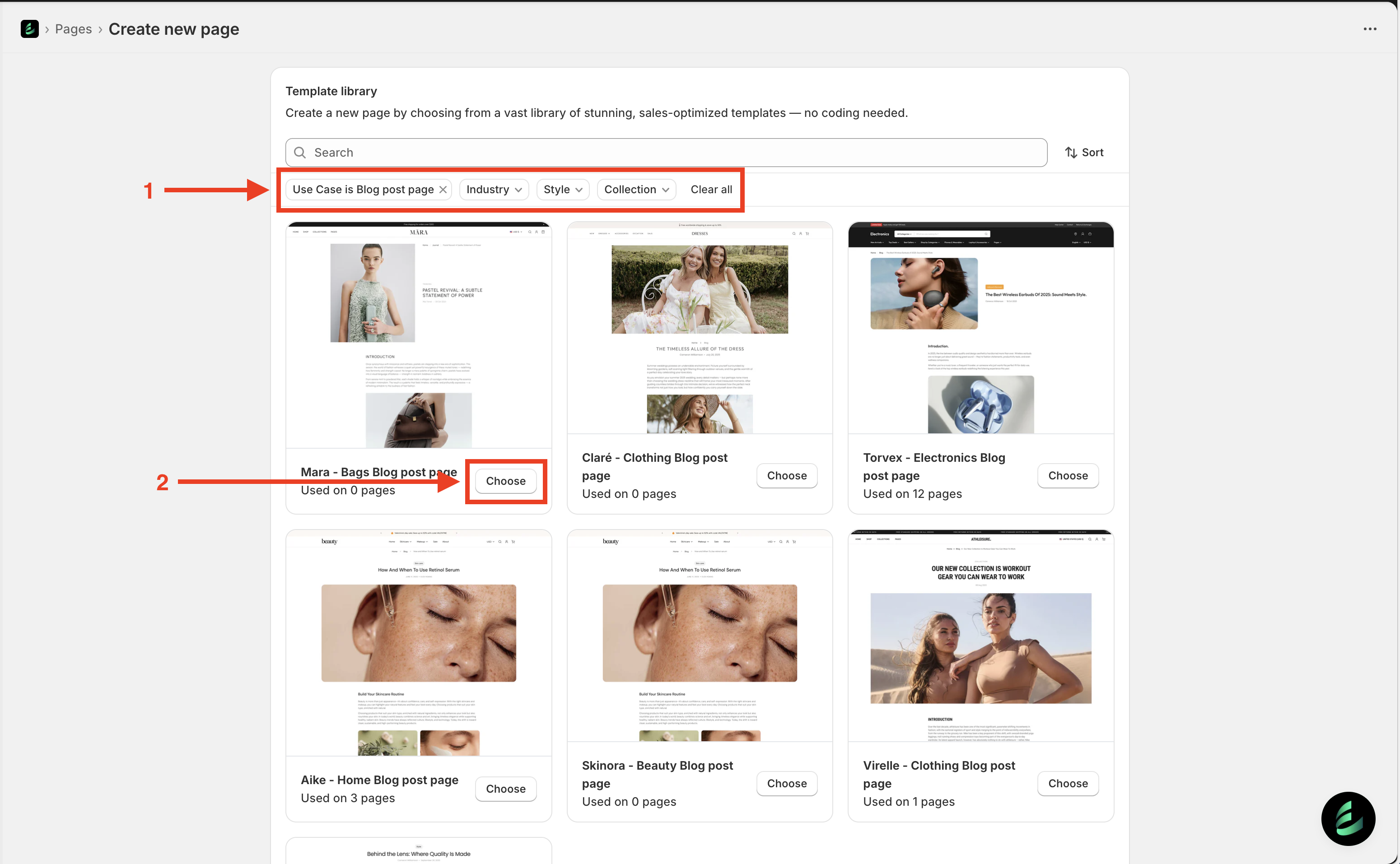
After completing Step 2, Ecombe will take you to the **Template Library**.
Select **Use case: Blog post page**. You can also filter templates by **Industry**, **Style**, or **Collection** to quickly find a suitable design.
Click the **Choose** button to select a template.
{% endstep %}
{% step %}
#### Set up the Blog post page
#### Page Assignment
Assign which blog posts will use this blog page. Ecombe provides two options:
1. **All articles**
All blog posts in your store will use this blog page. The page will be assigned as the default blog post page.
\[ Screenshot ]
2. **Custom articles**
Select specific Blogs post to use this blog page.
\[ Screenshot ]
#### **Page settings**
Access **Page Settings** from the Ecombe left sidebar and configure the following options:
* **Page title**: Enter a name for your blog post page template to easily manage it in Page Manager, especially if you have multiple blog post page templates.
* **Page URL**: You do not need to fill in this field. Ecombe blog post pages use Shopify’s default URL structure.
* **Theme template name**: This is the name of the template saved in your Shopify store. Ecombe will automatically generate the template name after the page is published.
* **CSS and JavaScript**: Add custom styles or advanced scripts for your template. If you need assistance, feel free to contact our support team.
{% endstep %}
{% step %}
#### Edit the Blog post page
In this step, you can customize the **Ecombe Blog post Page Template** to match your needs.
Click on each section to edit its content and settings. The options are designed to be simple and intuitive, similar to Shopify Theme Customization.
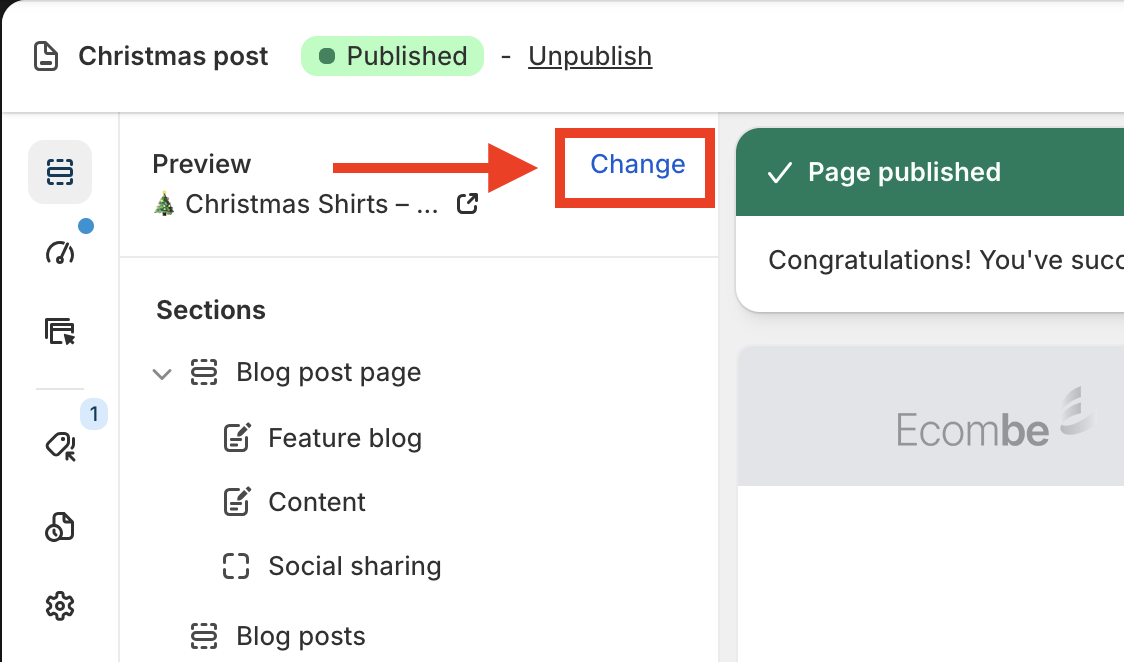
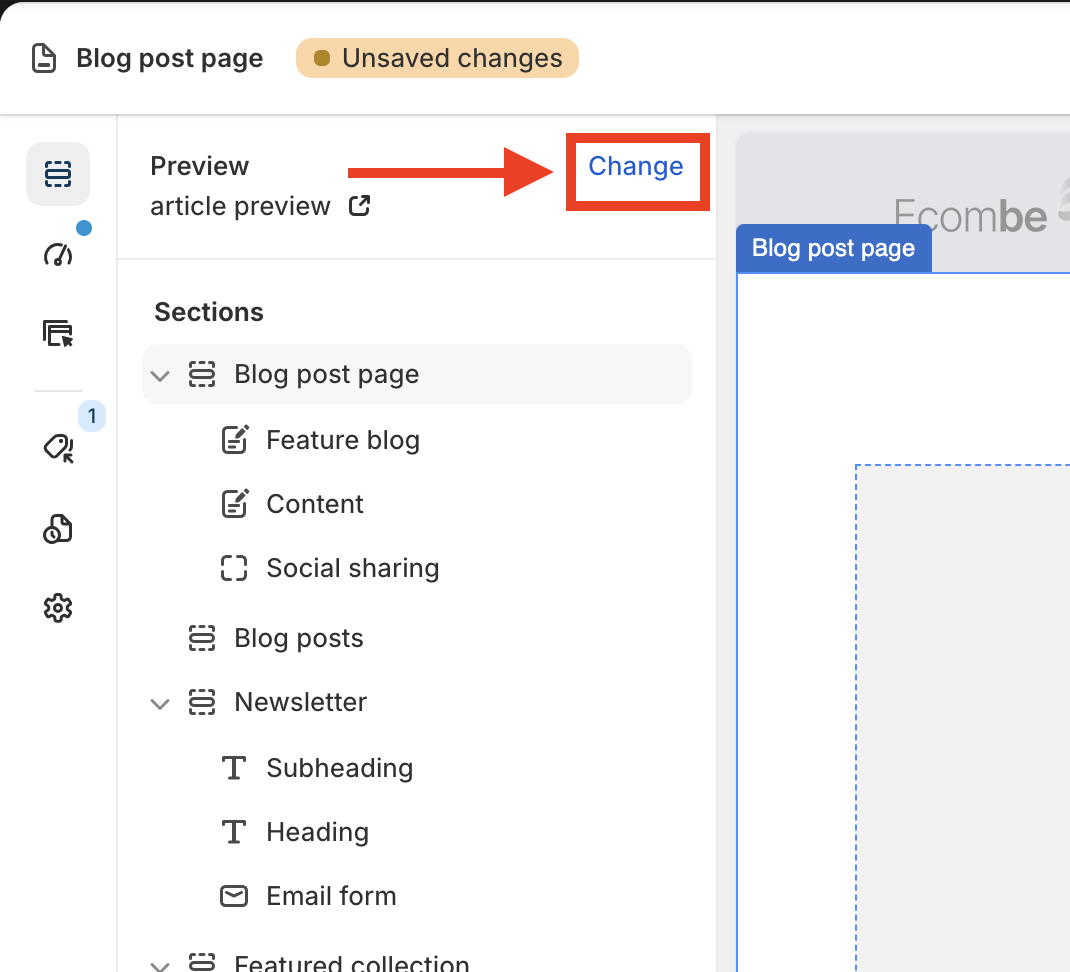
**Tip:** You can change the preview blog by clicking **Change** in the editor.
{% endstep %}
{% step %}
#### Publish your Ecombe Blog post page
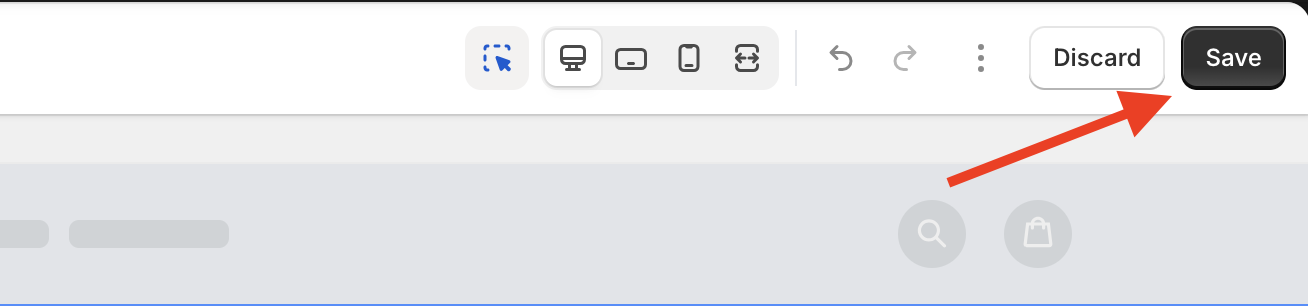
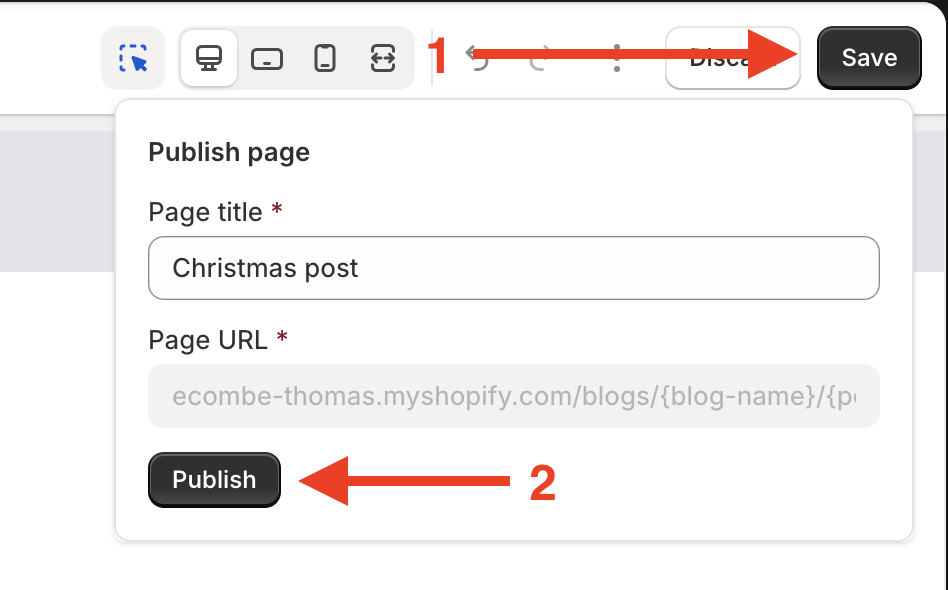
After completing the setup and customization steps, you can choose to **Save** or **Publish** the blog post page.
* Click **Save** to store the template as a draft. This will not affect your storefront.
* To use the Ecombe blog post page instead of the Shopify theme blog post page, click **Publish**, then confirm by clicking **Publish** again in the dialog.
{% endstep %}
{% endstepper %}
## Result
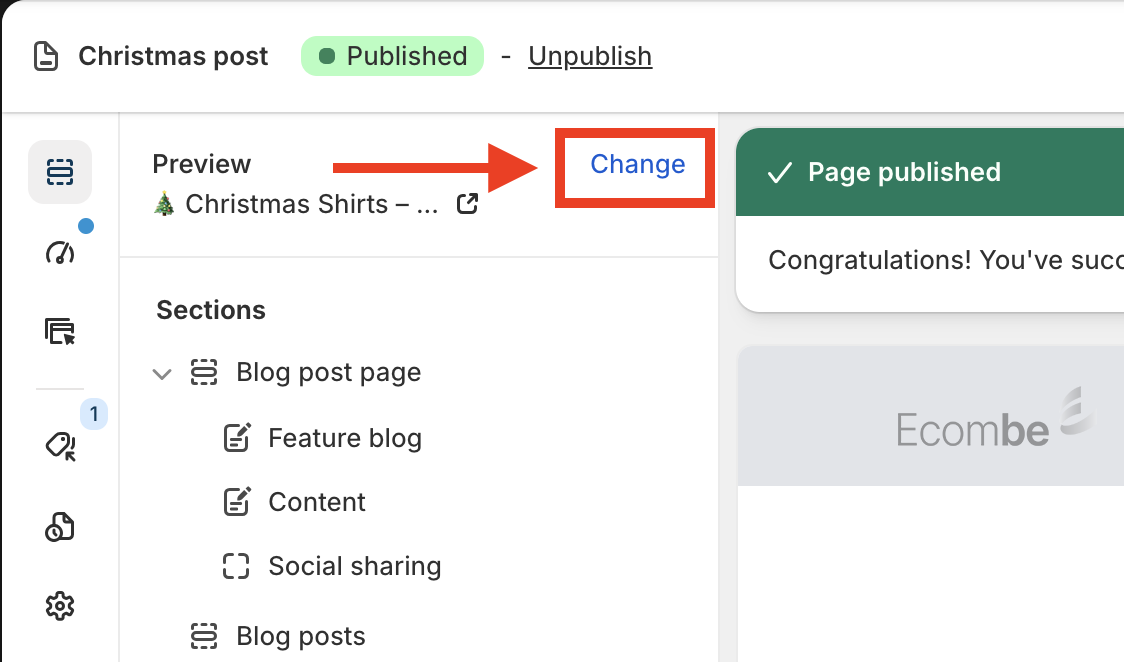
After successfully publishing the Ecombe Blog post page, your store’s blog page will be replaced by the Ecombe Blog post page.
You can click **View live page icon** to see the blog post page directly on your storefront.
## Tips & Best practices
**1. Check the layout on tablet and mobile devices**
Always check your blog page on tablet and mobile devices, as most traffic comes from mobile users.
You can customize layouts for mobile and tablet without affecting other devices.
**2. Preview your template before publishing**
Preview your blog post page before publishing to ensure it displays correctly on your live storefront.
## Common issues
#### 1. The blog post page does not appear on the storefront
Make sure the blog post page is published and correctly assigned to the blog post.
#### 2. Changes are not visible after editing the blog post page
Try republishing the blog post page and refresh your browser cache.
#### 3. Blog post content is not displayed correctly
Check the blog post content in Shopify Admin to ensure all sections (text, images, metadata) are filled in properly.
## FAQ
#### 1. Can I use multiple blog post page templates at the same time?
Yes. You can create multiple blog post page templates and assign them to different blog posts. However, each blog post can use only one template at a time.
#### 2. Can I edit the blog post page after it has been published?
Yes. You can edit the blog post page at any time. Simply update the layout and republish the page to apply your changes.
#### 3. Will customizing the blog post page affect my existing blog content?
No. Customizing the blog post page only changes the layout. Your existing blog post content will remain unchanged.